|
Prix de Rome / 2010 / prijsvraag August Allebeplein Amsterdam
|
 |
|
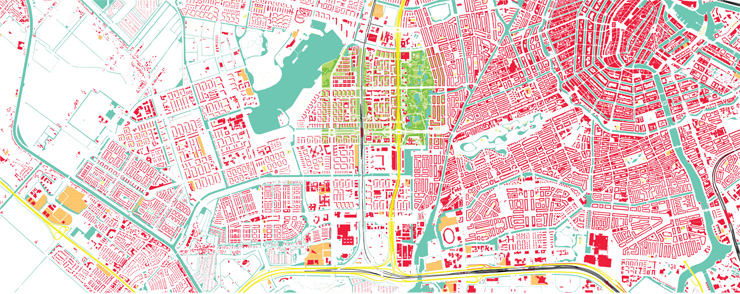
De kaart van Amsterdam laat zien aan dat het August Allebeplein
in stadsdeel Slotervaart op de rand van intensieve bebouwing
ligt. Het nabij gelegen Rembrandt Park wordt logischerwijze
ontzien van stedelijke uitbreidingsplannen. Het gevolg is dat
de, door Van Eesteren volgens tuinstad principe ontworpen, wijk
nu onder de stedelijke verdichtingsdruk zijn heldere opzet
begint te verliezen. Dit proces is reeds waarneembaar op
verschillende plekken op de locatie, zoals bouwblokken die
worden dichtgebouwd , verouderde grondgebonden woningen die
plaatsmaken voor appartementencomplexen en diverse
uitbreidingen. Ook ons plein is onderhevig aan deze
verdichtingsopgave. Het plein is oorspronkelijk opgezet als een
openbare ruimte om te ontspannen en te genieten, getuigden een
grote vijver en fontein. Later is dit geleidelijk veranderd
richting meer wijkservice gerichte activiteiten zoals
buurtsupers en kleinschalige winkeltjes, politiepost,
gebedshuizen en een kleine bibliotheek.
|
 |
|
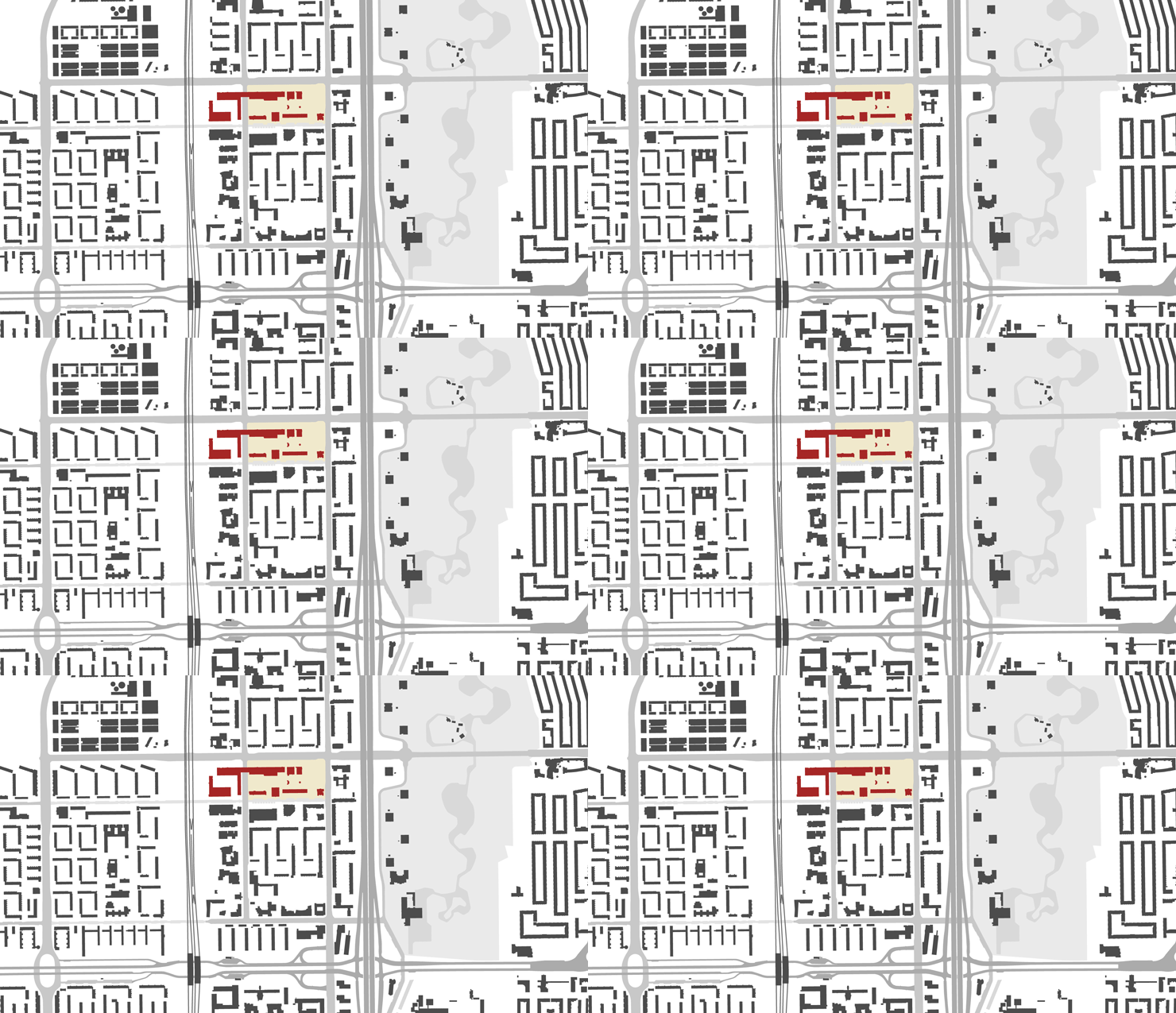
Door de open stedenbouw is er een continue afwisseling tussen
voor en achterkanten van gebouwen. De oude gebouwen oriënteren
zich wel tot het plein maar de nieuwe toevoegingen niet.
Daarnaast geven de twee aan het plein gesitueerde supermarkten
door hun introverte uitstraling het plein een gevoel van
achtergebied. Ruimtelijke gezien wordt het plein wel bepaald
door enkele grote gebouwen, maar tegelijkertijd vloeit de
omkaderde ruimte ook weer weg op enkele plekken op zowel plint-
en verdiepingniveau. Welke functie dit plein in de toekomst zal
gaan vervullen geeft het door de jaren gewijzigde programma
eigenlijk al zelf aan. De stedelijke verdichting zal in de
toekomst de wijkgerichte centrumfunctie van het plein
intensiveren en de oorspronkelijke recreatie en
ontspanningsfuncties ontwikkelen zich verder in het nabij
gelegen Rembrandtpark of Sloterpark.
|
 |
|
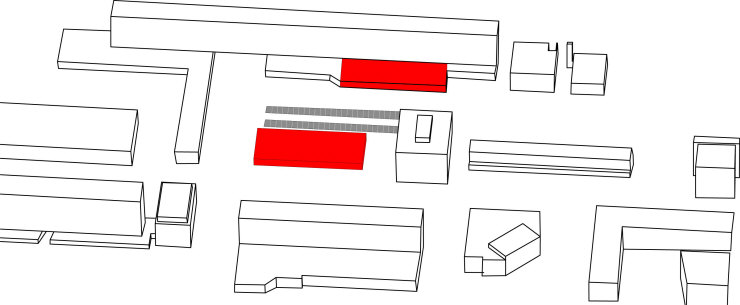
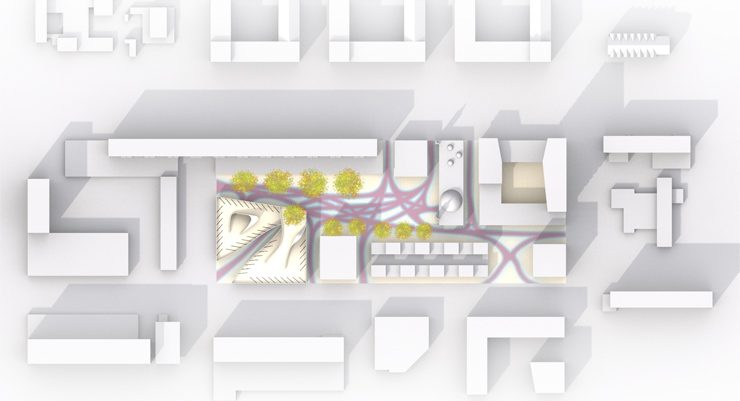
De strategie voor de herinterpretatie van het August Allebeplein
is om de schaal aan te passen aan de functies. Het betekent een
ruimtelijke verkleining door het huidige Lidl-gebouw te
vervangen voor een groter gebouw. Hierdoor verplaats het plein
zich iets meer naar het oosten en midden van de locatie. De
braakliggende hoek van de oude school wordt ingevuld door forse
torenachtige bebouwing met kantoren en woningen, zodat deze een
oostelijke rugfaçade op niveau biedt en het lange lineaire
gebouw steun geeft. De moskee krijgt door een uitbreiding naar
zuidelijke zijde een font aan het plein en sluit enigszins het
plein op plint niveau af en gebruikt het om de entree te
herpositioneren. Dan blijft er aan de zuidelijke zijde van het
plein nog één gebouw over dat nog een nadelige eenzijdige
oriëntatie kent, dit wordt opgelost door een lineair gebouw met
op de beganegrond aan pleinzijde kleinschalige (bestaande)
winkelfuncties waarop woningen met drive-in en entrees aan de
zuidzijde. Tot slot nog een hoogbouw ingreep naast het spoor om
het plein ook aan westelijke zijde op verdiepingsniveau te
omkaderen. |
|
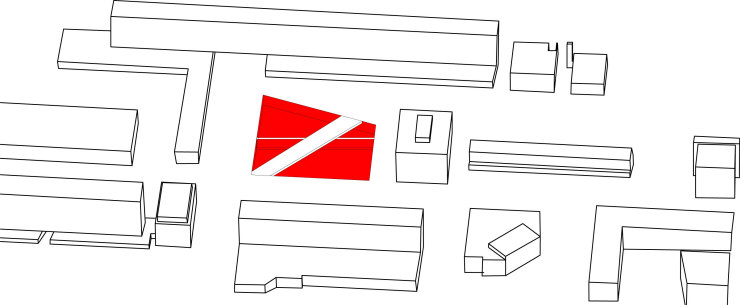
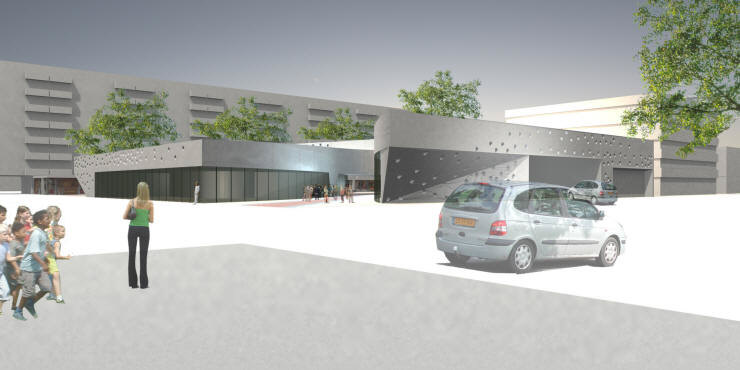
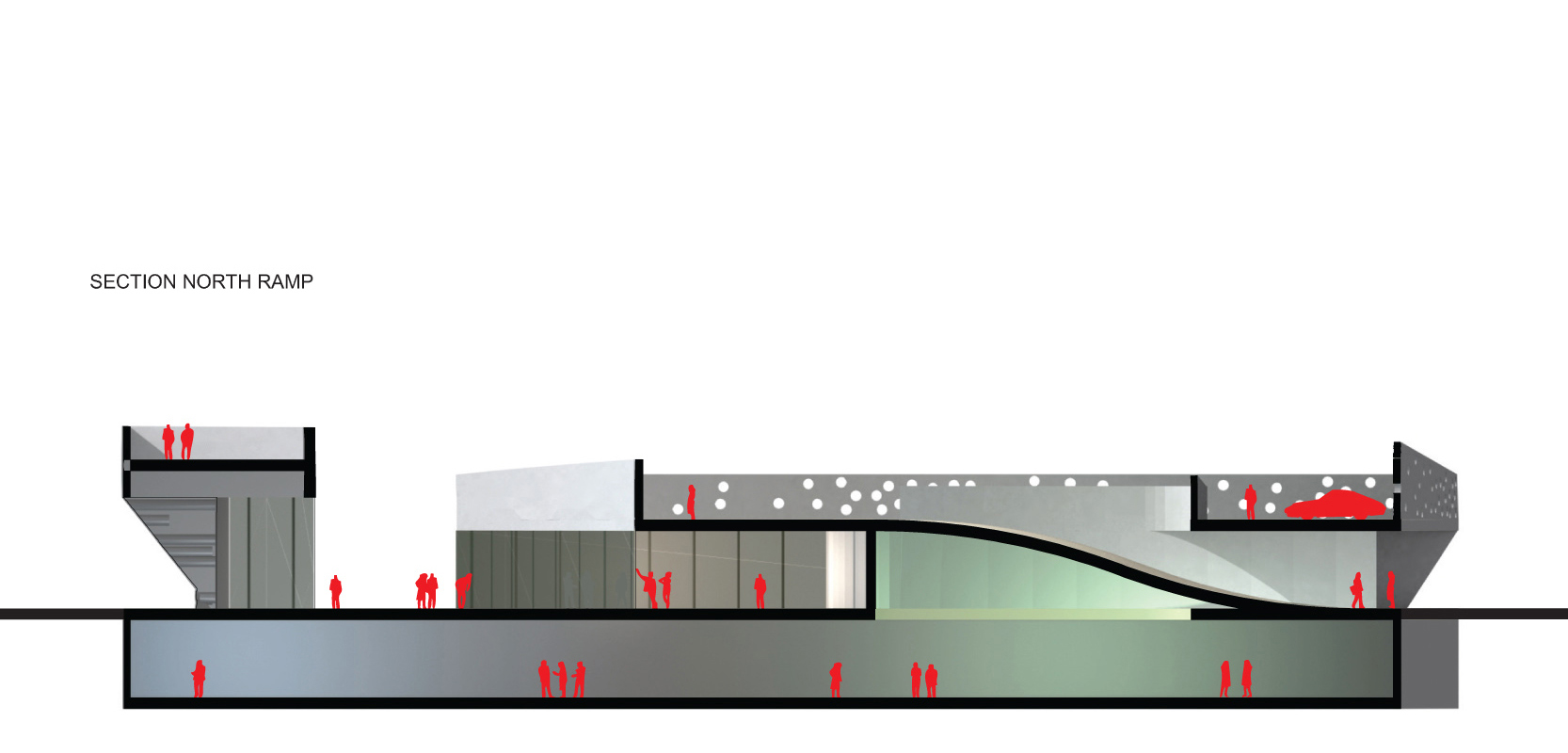
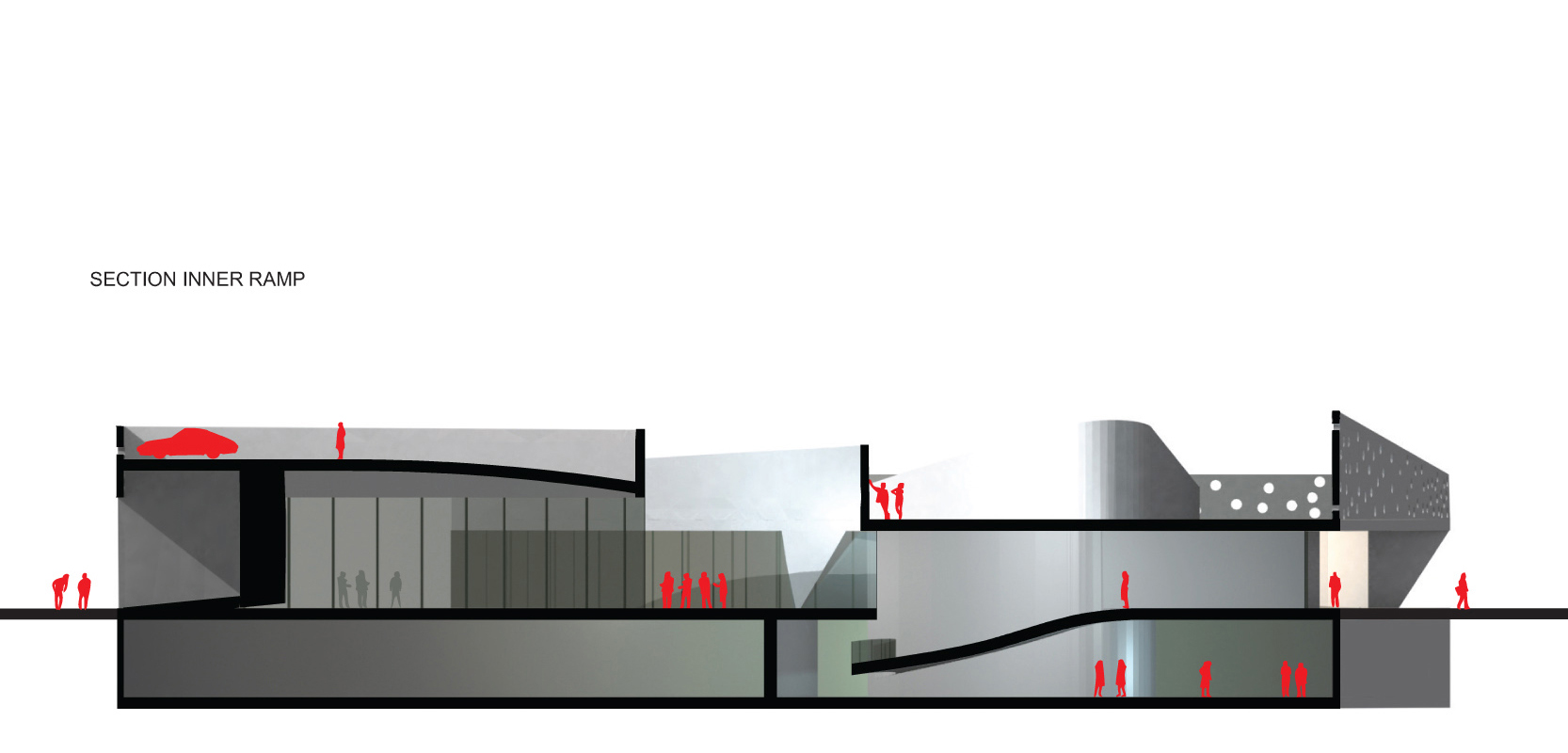
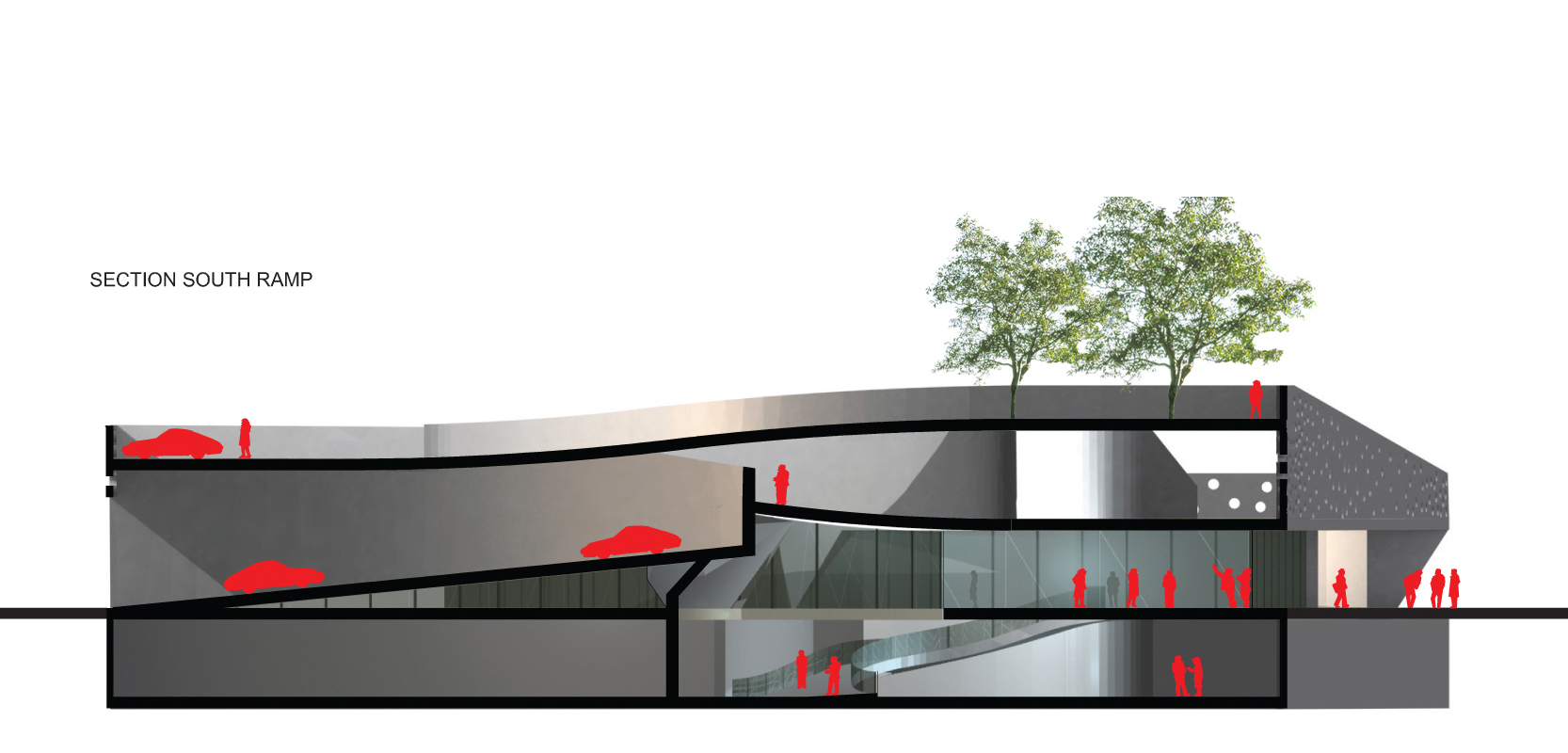
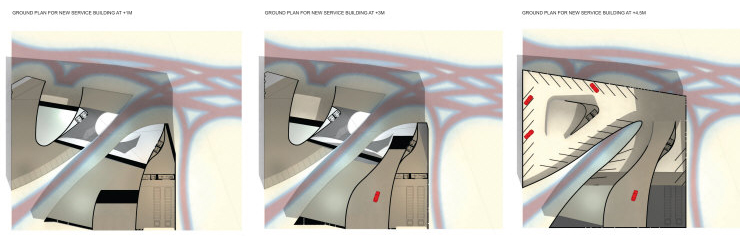
Als we nu verder inzoomen op het plein constateren we dat de
openbare ruimte vooral wordt gebruikt als
gelegenheidsparkeerplaats voor de supermarkten en dat er veel
introverte gevels zijn ondanks de vele ramen. De supermarkten
hebben geen behoefte om visueel contact te bieden met het plein.
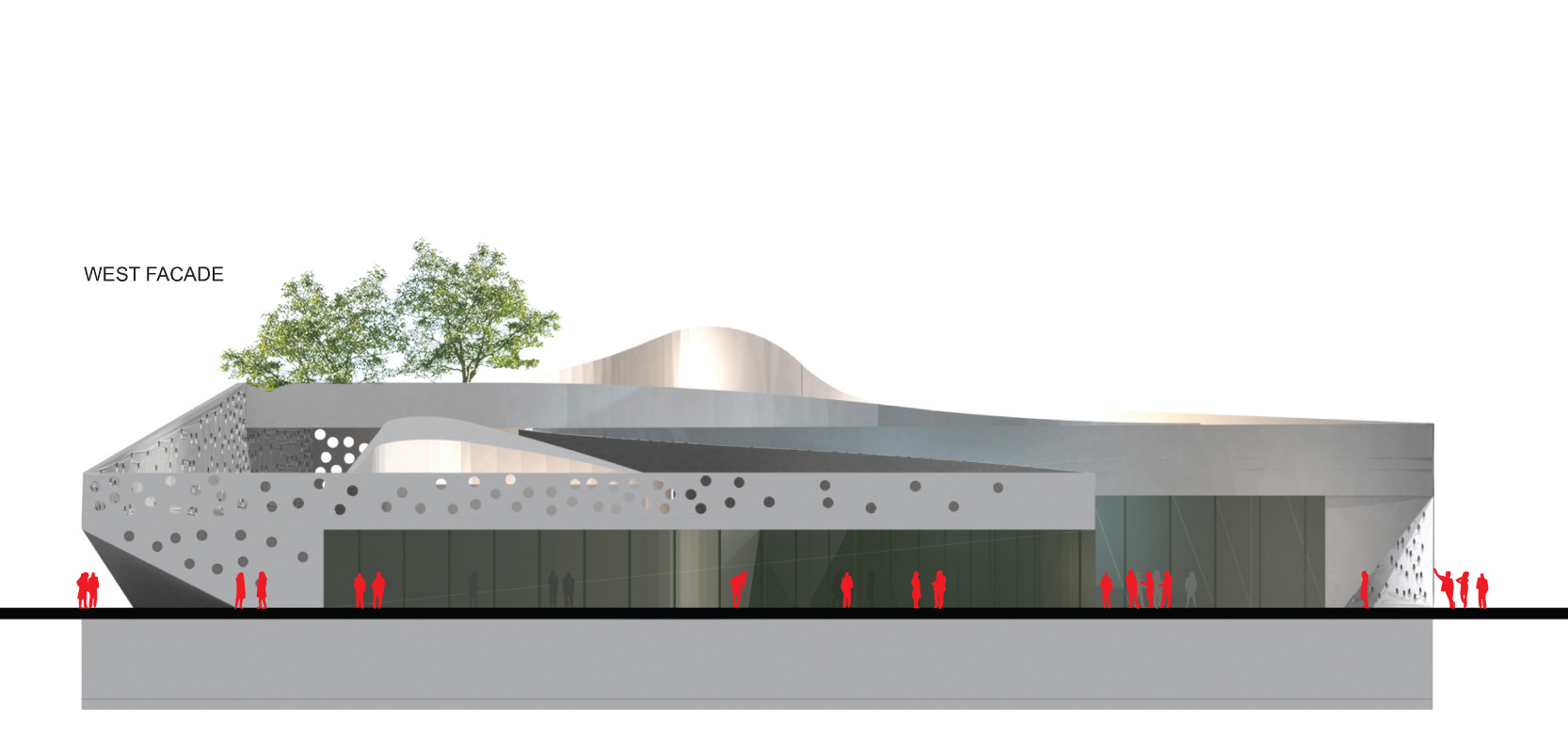
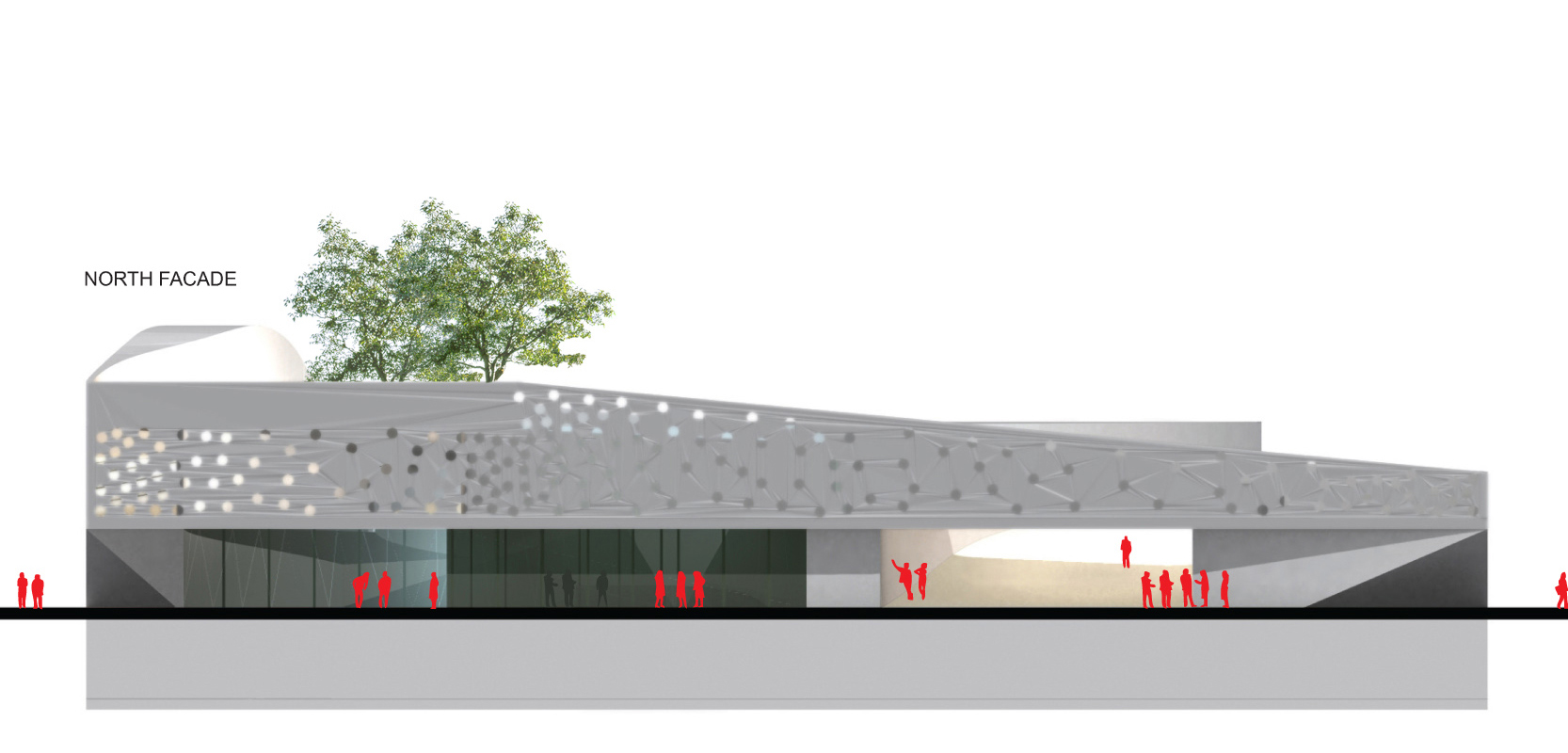
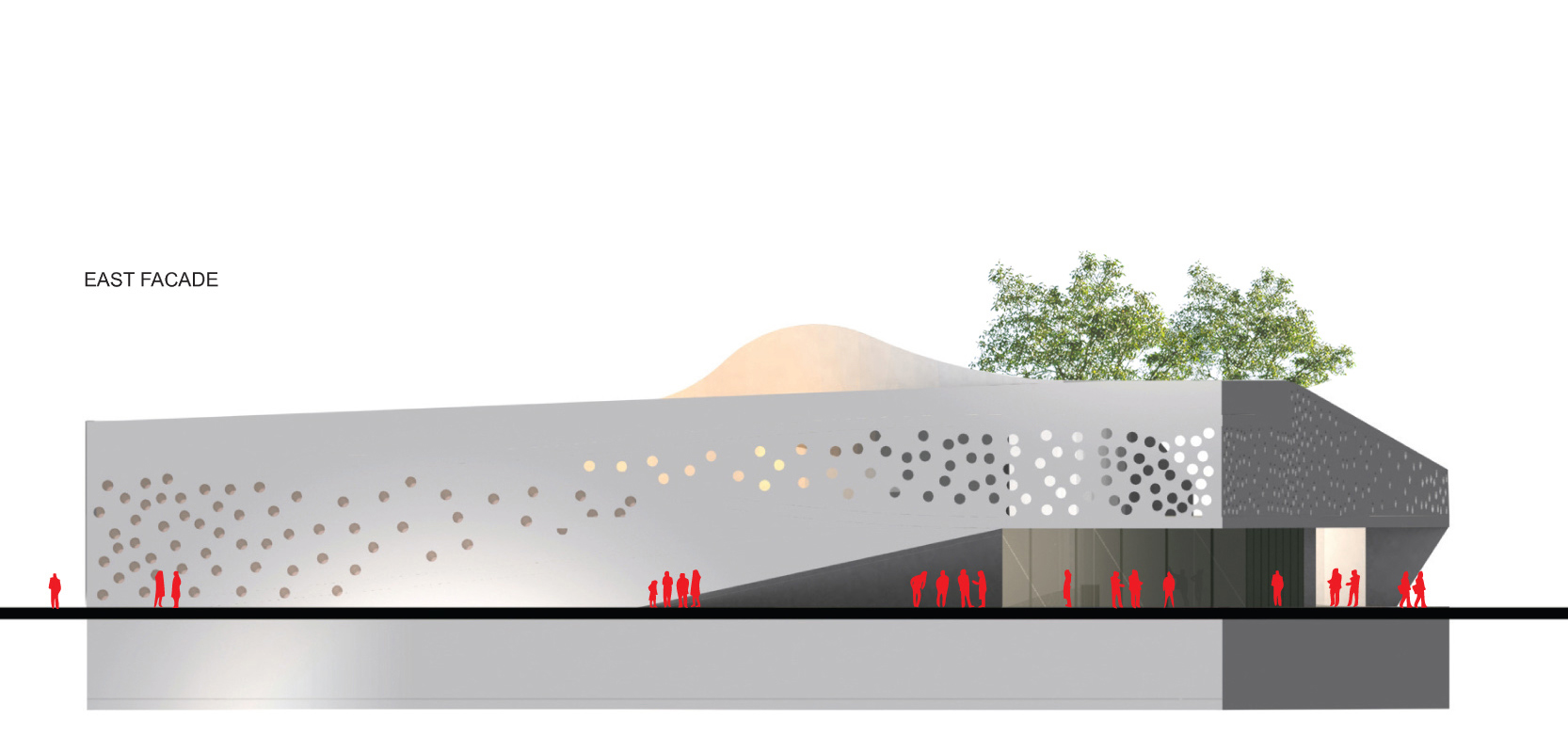
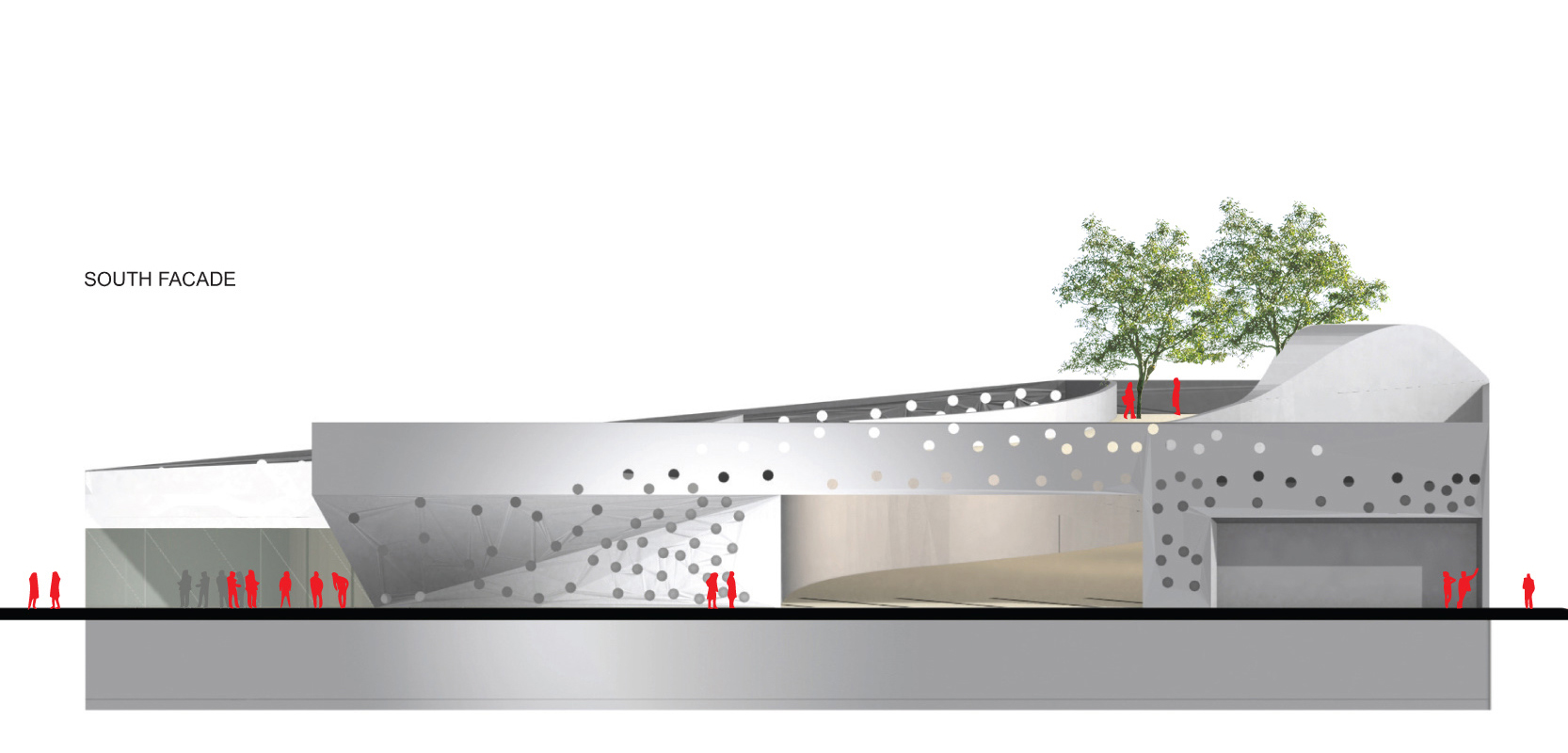
Daarom verplaatsen we de twee ruimten onder het pleindefiniërend
gebouw. Zo ontstaan er op beganegrond vele mogelijkheden voor
winkels welke de visuele interactie met het plein wel waarderen
en benutten. Routingtechnisch komt er een doorsteek van de hoek
van het plein naar het kruispunt; deze tweesplitsing op begane
grond creëert tevens een mogelijkheid tot kleinschalige
winkelfuncties en de entrees tot de twee supermarkten die toch
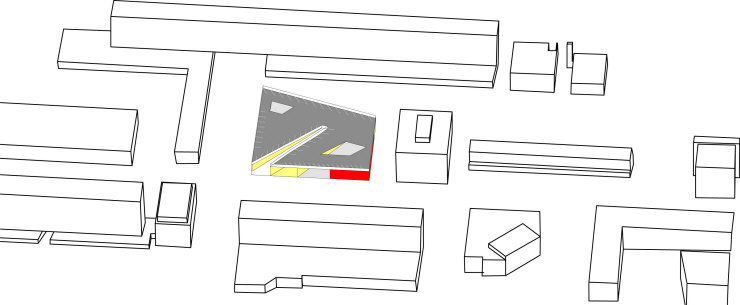
middels grote vides visueel contact hebben met de passage. Het
parkeren wordt naar het dak verplaatst, bereikbaar via ruim
bemeten hellingbanen die vloeiende verbindingen met het maaiveld
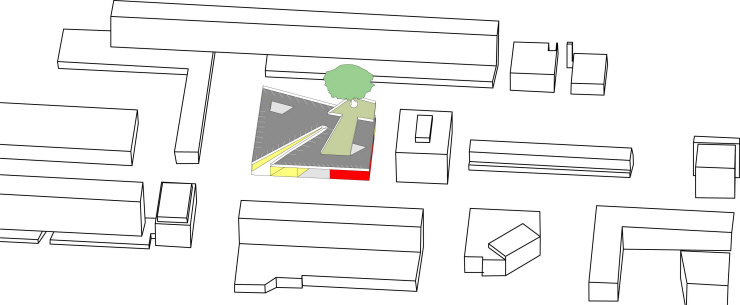
scheppen. De opgangen eindigen uiteindelijk in een stadstuin met
uitzicht over het plein, dit als knipoog naar zijn beginselen.
Zo krijgt het gehele dak een aantrekkelijker aanzicht vanuit de
omliggende hoogbouw. In het gebouw zijn strategisch twee kernen
geplaatst die ook alle ontsluiting verticaal oplossen. |
|
|
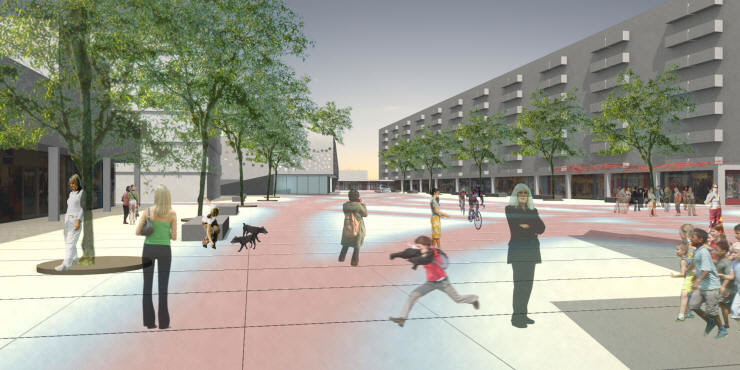
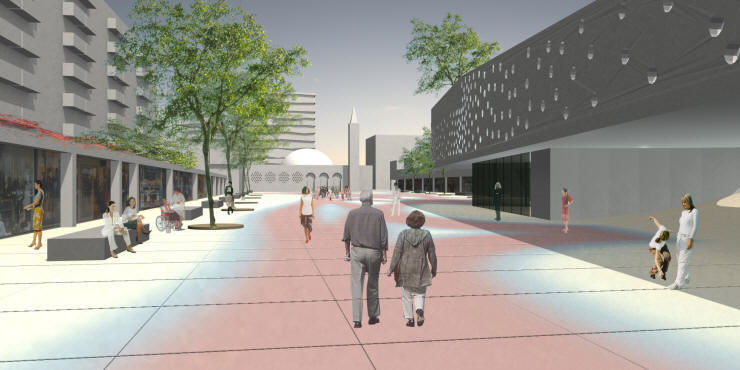
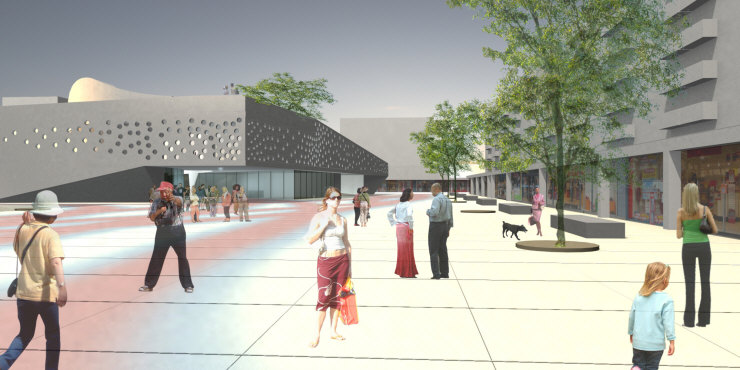
Het plein is daarmee ontdaan van visuele contactbelemmerende
items en ruimtelijk gedefinieerd. Nu zal het kunnen functioneren
als openbare ruimte voor activiteiten, zoals markten,
buurtfeestjes, ontmoetingsplaats en ontspanningsplek met aan de
randen zitgelegenheden en bomen die de lengte van het plein
benadrukken. Maar de grootste activiteit die het plein in zich
zal opnemen is het afwikkelen van de langzaam verkeerstromen in
het gebied. Dit proces geldt als inspiratie voor in kleuren
dungelaagde betonnen tegels die de bodem zullen sieren. Door het
gebruik ontstaan gedurende de tijd, slijtplekken en worden
andere kleuren zichtbaar. Zo ontstaat een plein dat de
geschiedenis van het gebied in zich opneemt en tegelijkertijd
zich weer aanpast aan toekomstige ontwikkelingen. |
|